
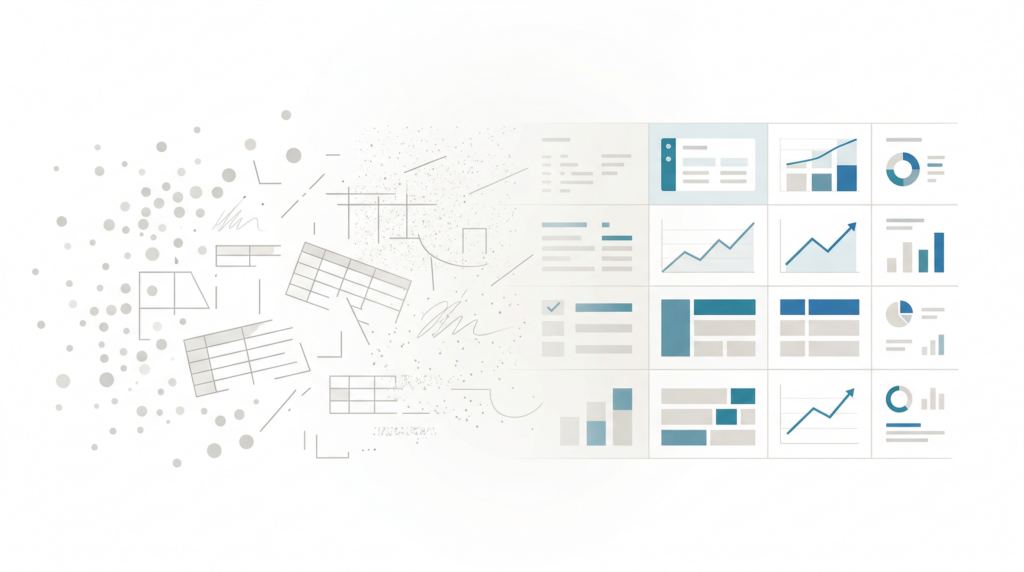
From Data Chaos to Confidence: A Practical Path for Nonprofits
Donor records, program metrics, financial reports, survey responses, spreadsheets, and more. You create data at every turn. Yet despite having more data than ever, many organizations still struggle to answer basic questions confidently, resorting to extensive manual tweaks and data manipulation to make it look right.
In my nearly 20 years leading technology and transformation initiatives across Africa, Europe, and the U.S., I have seen Organizations of all sizes face the same challenge: They want to be data‑driven, but their foundation is not strong enough to support this in an agile way. The good news is that you don’t need a large IT department or a massive budget to fix this. What you do need is a practical, right‑sized approach, one that aligns data with your mission, people, and operational reality.
This article outlines that path, drawing on my experience, industry insights, and a framework created specifically for organizations with lean teams and big goals.
Why do organizations Struggle With Data
Nonprofits face a unique set of pressures that make productive use of data far more challenging than it appears from the outside. These organizations operate with lean teams where people wear multiple hats, and systems tend to grow organically over time rather than through intentional design. Reporting demands from funders, boards, and regulators increase each year, yet internal capacity to meet them rarely keeps pace. Staff members bring varying levels of technical skills, and funding cycles often create a stop‑start pattern in technology investments that challenges long‑term stability.
It’s no surprise, then, that data becomes fragmented and inconsistent. This isn’t a failure of leadership. It’s a structural challenge rooted in the realities of nonprofit operations. It’s a challenge that can be solved using the right approach, support, and a commitment to building a healthier data culture over time.
Data Confidence Starts With Culture, Not Technology
Before any organization invests in tools, dashboards, or AI-powered automation, it must first understand its relationship with data. That begins with culture. A healthy data culture is a shared belief that data is an asset that enables strategy, strengthens decision-making, and supports the mission. Whether an organization has two people or a thousand, the first step is to create that common understanding. Success with data, and eventually with AI, depends on collaboration, awareness, and genuine buy-in across the organization.
This cultural foundation shows up in very practical ways. Leaders must treat data as part of mission delivery, not an administrative burden. Staff need to understand why data matters to their work and how it strengthens programs, fundraising, compliance, and reporting. Expectations around data quality and ownership must be clear. And perhaps most importantly, teams must be willing to improve the processes behind the data, not just the tools used to collect it.
At Medge, we often begin our engagements with conversations rather than technology. Many clients are surprised by how much time we spend exploring how they operate, how information flows, and how data is collected and utilized long before we discuss systems or solutions. This step is essential. When team members see how better data directly improves outcomes, they become active partners in the process. That buy‑in is what ultimately determines whether any data initiative, AI‑driven or otherwise, will succeed.
Diagnose Before You Prescribe: Understand Your Data Reality
Don’t jump straight to solutions (“We need a new CRM!”). The real value comes from understanding your current state.
At Medge, we recommend two foundational activities:
A. SWOT Analysis
A structured way to uncover strengths, weaknesses, opportunities, and threats related to data. This helps leadership improve its understanding of the business and the drivers behind its broader plans.
B. Stakeholder Interviews
These reveal frustrations, hopes, and needs. Interviews help explore the challenges the business currently faces and understand how data supports (or hinders) operations.
In my experience, this is where breakthroughs happen. A program manager might reveal that reporting takes 12 hours because data lives in five places. A development director might admit they don’t trust reports from a different unit. A finance lead might highlight inconsistencies about data received from the program teams. These insights shape your data strategy far more effectively than any technology assessment alone.
Build a Right‑Sized Data Strategy (Not a 50‑Page Document)
A data strategy for a nonprofit should be practical, actionable, and aligned to mission outcomes, not a theoretical exercise. This defines how the organization wants to use data to support the achievement of identified business capabilities or strategic goals.
A strong data strategy includes:
A clear vision for how data supports the mission
Example: “To become a data-driven leader, where every decision is backed by evidence and our impact is indisputable to every donor and the communities we serve “.
Guiding principles
Such as:
- Data must be accurate and consistent
- Data must be accessible to those who need it
- Data must be protected and compliant
Prioritized data initiatives
- Not everything needs to happen at once.
- Quick wins build momentum.
Defined roles and responsibilities
- Who owns data and quality?
- Who maintains systems?
- Who approves definitions?
A roadmap with realistic timelines
- Organizations need achievable steps, not perfection.
Move From Strategy to Action: Start with High‑Impact, Low‑Effort Wins
“When prioritizing, put quick wins at the top of the list.”
For nonprofits, typical quick wins include:
- Standardizing key data definitions (e.g., “active donor,” “participant served”, “Project vs Activity”)
- Cleaning up duplicate records
- Improving metadata and documentation
- Streamlining a single reporting process
- Consolidating spreadsheets into a shared source of truth
- Implementing basic data governance practices
These small steps build trust and demonstrate value quickly.
Technology Comes Last, and Should Be Right‑Sized
Once culture, clarity, and priorities are clear, technology decisions become easier and more effective.
Nonprofits don’t need enterprise‑grade platforms. They need:
- Tools that integrate
- Systems staff can actually use
- Automation that reduces manual work
- Security that protects sensitive data
- Reporting that is consistent and transparent
At Medge, we help organizations modernize with tools like Microsoft 365, MS Fabric, Power Apps solutions, and workflow automation, all while keeping costs low and capacity in mind.
The Payoff: Data Confidence That Drives Mission Impact
With the move from data chaos to confidence, the shift is immediate and transformative. Fundraising decisions become sharper, program reporting becomes more accurate, and grant applications grow stronger. Operations run more efficiently, boards and funders gain clearer visibility, and staff experience far less frustration. Most importantly, teams reclaim time and energy to focus on the mission rather than wrestling with spreadsheets.
Data is an asset only if it is high-quality and you can make sense of it.
Data confidence isn’t about technology. It’s about empowering your organization to make better decisions, faster, with improved clarity.
Final Thoughts: Nonprofits Deserve Better Data, and It’s Achievable
The data journey is a lot like training for a run: you start small, build toward a 5K, then a 10K, then a half-marathon, steadily increasing your capacity as you go. With a clear path, the right support, and a strategy that respects your mission and your constraints, progress becomes sustainable, and confidence grows with every step.
At Medge Technology Solutions, we help organizations build that path, from culture to strategy to implementation, with practical, right‑sized solutions that work in the real world.
If your organization is ready to move from data chaos to data confidence, book a free consultation call. I’d be glad to discuss what that journey could look like for you.